Co-occurrence Analysis
Girlhood Horror & Captivity
27 games in dataset
Girlhood and Captivity in Doki Doki Literature Club
When first starting the game at a quick glance, Doki Doki Literature Club presents itself as a wholesome interactive visual novel game. It sets itself similarly to other dating simulator genre of games. The narrative follows four girls in a school club, with bubbly pastel aesthetics and cheerful music. It invites the player/main character to form young romantic connections with each of these individual girls based on the choices made. On the surface level, it portrays itself as an innocent girlhood experience. However, through this, the game traps you in the false sense of security, luring deeper into a sense of adolescence and captivity.
The entire game in itself is defined by its enclosure. The Literature Club in the game is the one primary space of the narrative, with little to no external variables. There are no teachers, parents, adults or any sense of the existence of others from the outside world. Each of the characters exist primarily within the club space and their personalities revolve heavily around it. Each of the girls attempt to form a relationship with the protagonist, whether it be romantically driven or only for companionship. The girls themselves aren’t physically imprisoned in any literal sense, rather they are ontologically trapped by the game’s existence. As the game continues, the players realize that the construct of “romantic” pressure becomes impossible to ignore and avoid.

Each girl embodies a typical archetype of what may be considered “girlhood”. Sayori is a cheerful character, Natsuki snippy, but sensitive, Yuri quiet yet intellectual and Monika more accomplished and composed. These aren’t character development traits, but instead predetermined traits that embody the theme of girlhood. They are unable to grow, change or become something beyond what has already been determined of them by the game. Here is where the horror of Doki Doki Literature club begins: the idea that the girls are essentially “performing” for the protagonist that the player is controlling.
The game fundamentally embodies the themes of girlhood and captivity through the lens of looping horror. The player watches each of the girls experience their distress from a position of neutrality. The game begins to push the narrative further through the disturbing nature of the poems shared, shifting audio cues and the eventual visualization of suicide. The visual novel becomes an instrument of violation and captivity toward these young girls. The players are unable to look away, unable to “save” everyone. The game even goes as far as allowing you to “exit” the game, but loops you back into the endless cycle of horror reinforcing the idea of entrapment.
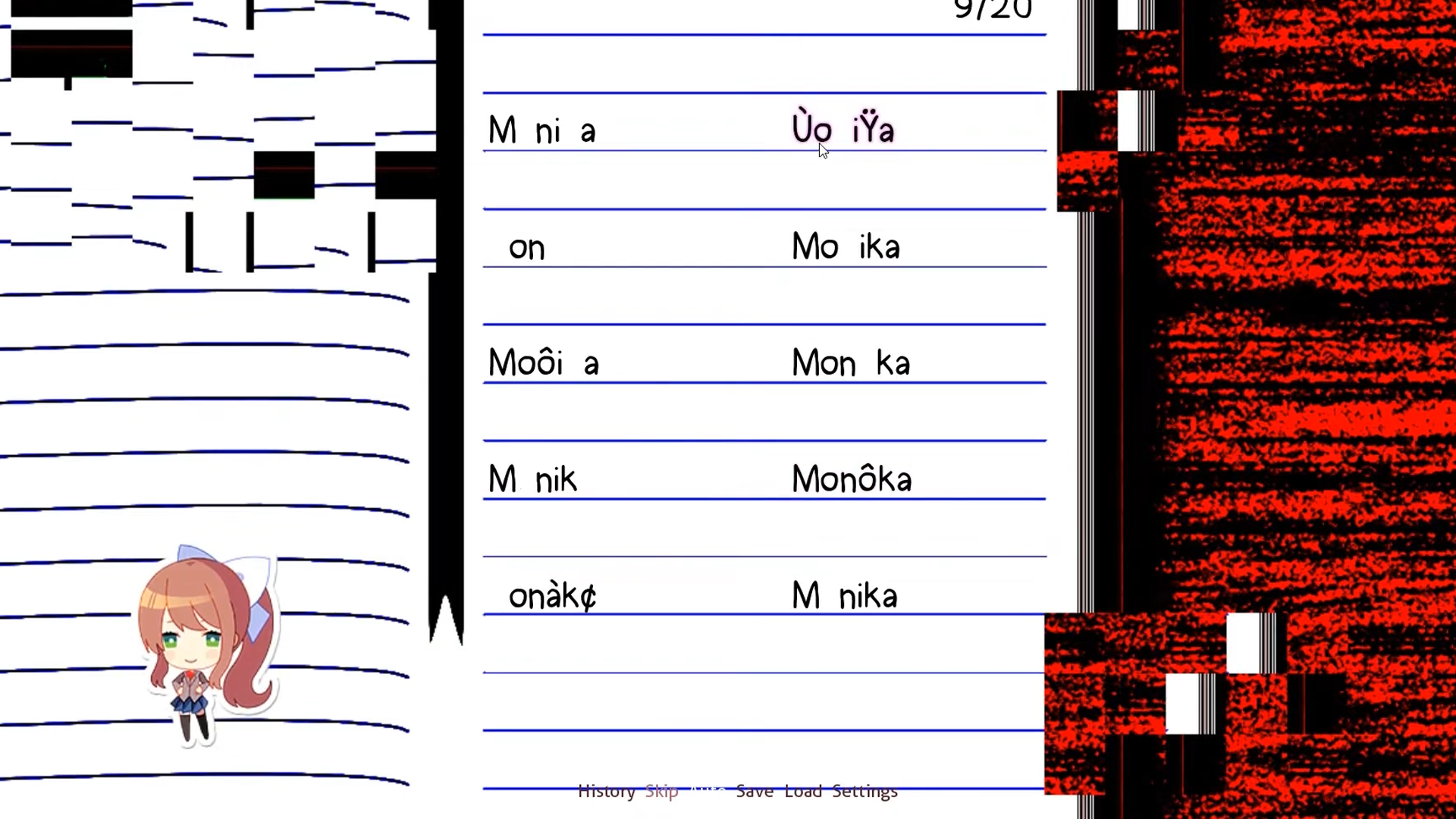
Through these endless horrific loops, this is the game’s biggest feminist gesture within the horror genre. The system is designed so the player’s gaze is always present, not only as a neutral observer, but as an active participant. The protagonist’s face is never showing, yet you play a pivotal role in the suffering of these girls. His captivity of the girls in this club is also yours. The game makes you sit and asks: what will you do with that?
What Doki Doki Literature club ultimately portrays is girlhood as a condition of structured entrapment. It is a performance maintained under surveillance, confined by a bounded space with no external salvation other than the male gaze. It is horror not from the outside, but something that festers within. Captivity is the premise, genre the cage, and the player as the final warden.